
If you want to increase organic traffic from Google, keyword research is the first SEO skill you should learn. It helps you discover what your audience is searching for, identify low-competition opportunities, and create content that ranks.
In this beginner-friendly guide, you’ll learn how to do keyword research for SEO using Google Keyword Planner, Google Trends, Google Search Console, and competitor analysis.
By the end of this guide, you’ll know how to find profitable keywords, analyze competitors, understand search intent, and build content that ranks.
If you’re looking for a broader SEO strategy, our guide on how to improve website traffic covers 15 proven strategies for increasing organic traffic.
Table of Contents
- What Is Keyword Research in SEO?
- Why Is Keyword Research Important?
- How to Find Seed Keywords
- How to Use Google Keyword Planner
- SEO Keyword Analysis Explained
- Search Intent Explained
- How to Analyze Competitor Keywords
- Best Free Keyword Research Tools
- How to Prioritize Keywords
- Frequently Asked Questions
- What to Do After Keyword Research?
What Is Keyword Research in SEO?
Keyword research is the process of finding the exact words and phrases people type into Google before searching for information, products, or services.
Instead of guessing what your audience wants, SEO uses real search data to create content around actual user queries.
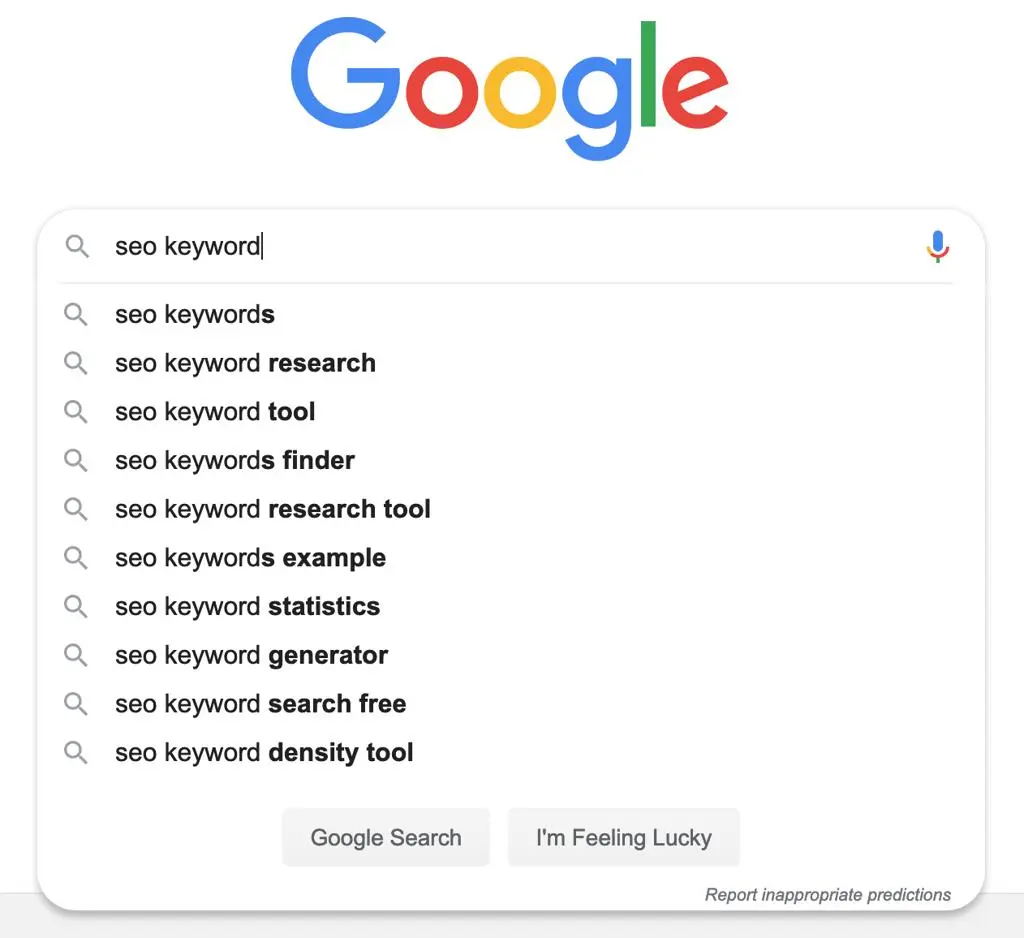
Example
| User Searches | Your Content |
|---|---|
| keyword research for SEO | SEO Guide |
| best keyword research tools | Tool Comparison |
| how to improve website traffic | Pillar Blog |
Why Is Keyword Research Important?
Keyword research helps you understand your audience before creating content.
Benefits of Keyword Research
- Find topics people are actively searching for
- Increase organic website traffic
- Discover low-competition keywords
- Create content that matches search intent
- Build topical authority in your niche
SEO Tip: Never write a blog before doing keyword research.
What Are Long-Tail Keywords?
Long-tail keywords are specific search phrases that usually target a narrower search intent. They may have lower search volume than broad keywords, but they can be easier to target and often provide more relevant traffic.
keyword research— broad keywordkeyword research for SEO— more specific keywordhow to do keyword research for SEO for beginners— long-tail keyword
The goal is not to choose the longest keyword. Instead, focus on specificity, relevance, and search intent.
How to Find Seed Keywords
A Seed Keyword is the main topic of your business. Every keyword research project starts here.
Ask Yourself
- What service do I offer?
- What problem do I solve?
- What would my customer type into Google?
- What topic best describes my website?
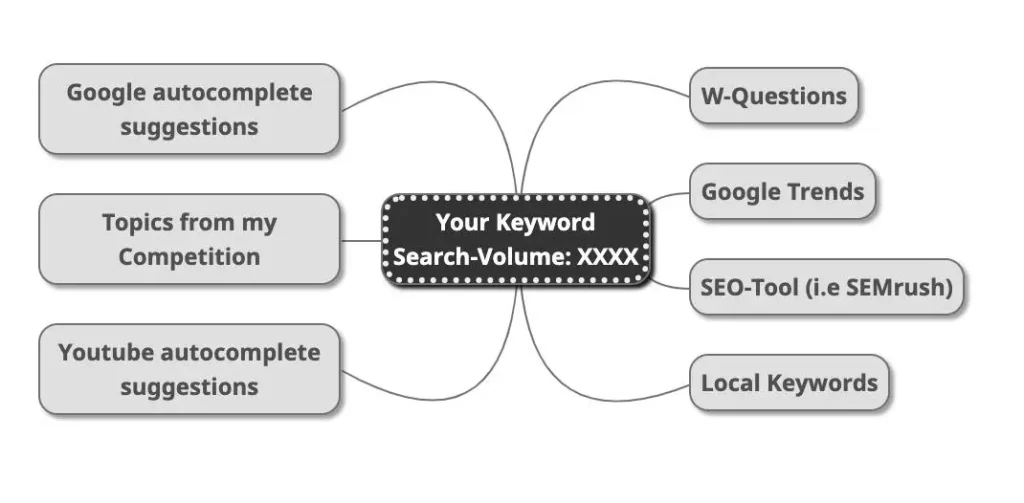
Seed Keyword Examples
| Business | Seed Keyword |
|---|---|
| SEO Agency | keyword research |
| Dental Clinic | dental implants |
| Fitness Coach | weight loss |
| Coffee Brand | coffee maker |
For this guide, our seed keyword is keyword research.
How to Turn Seed Keywords Into Keyword Ideas
Once you have a seed keyword, use it to discover more specific keyword ideas. Enter the seed keyword into Google Keyword Planner, Google Trends, or another keyword research tool to find related searches and variations.
- Start with your broad seed keyword.
- Collect relevant keyword variations.
- Check search volume and competition.
- Group keywords with similar search intent.
- Select a primary keyword for each page.
How to Use Google Keyword Planner for SEO Keyword Research
Google Keyword Planner is a free tool that helps you discover keyword ideas directly from Google’s database.
Step 1: Set Your Target Country
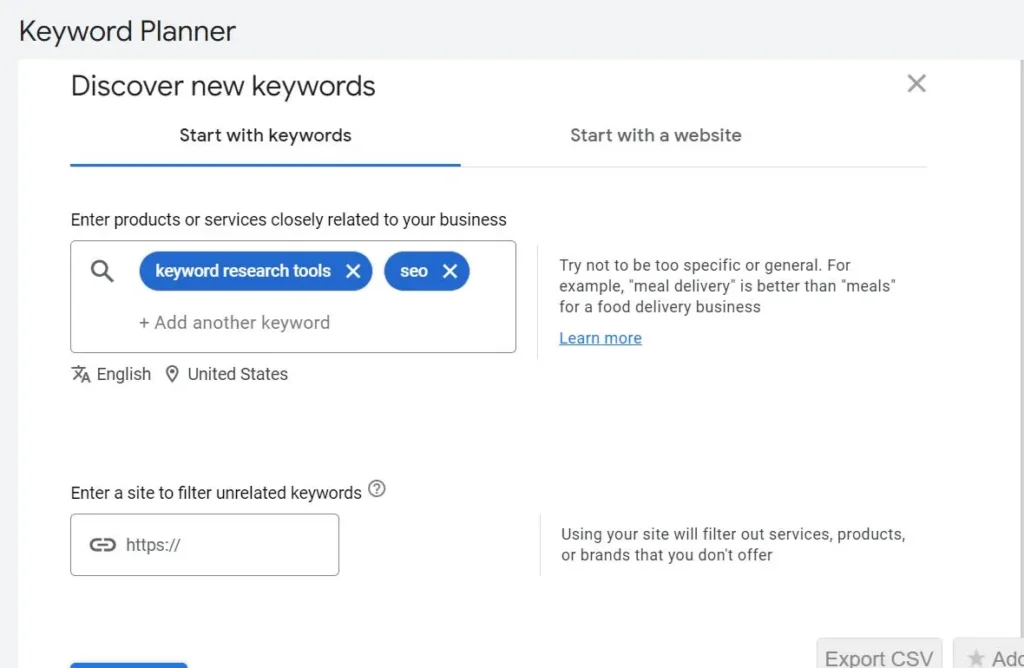
Choose these settings before searching:
| Setting | Value |
|---|---|
| Location | United States |
| Language | English |
| Search Network |
Step 2: Enter Your Seed Keyword
Type your seed keyword:
keyword research
Google will generate hundreds of keyword ideas.
Step 3: Sort by Monthly Searches
Look for keywords with strong demand and relevant intent.
| Keyword | Monthly Searches |
|---|---|
| keyword research | 100K–1M |
| keyword research for SEO | 10K–100K |
| SEO keyword analysis | 10K–100K |
| SEO and keyword research | 10K–100K |
Step 4: Select Your Primary Keyword
Our final keyword selection is:
| Type | Keyword |
|---|---|
| Parent Keyword | keyword research |
| Primary Keyword | keyword research for SEO |
| Supporting Keyword | SEO keyword analysis |
How to Choose the Right Keyword
Don’t automatically choose the keyword with the highest search volume. The best keyword is the one that matches your content, audience, search intent, and ability to compete.
| Keyword | Search Intent | Role |
|---|---|---|
| keyword research | Informational | Parent keyword |
| keyword research for SEO | Informational | Primary keyword |
| best keyword research tool | Commercial | Separate content opportunity |
In this guide, keyword research for SEO is our primary keyword because it closely matches the informational intent of the article.
SEO Keyword Analysis Explained
Finding keywords is only half the job. Now analyze their quality.
Search Volume
Search volume shows how many people search a keyword every month.
| Volume | Meaning |
|---|---|
| 100–1K | Low |
| 1K–10K | Medium |
| 10K–100K | High |
| 100K–1M | Very High |
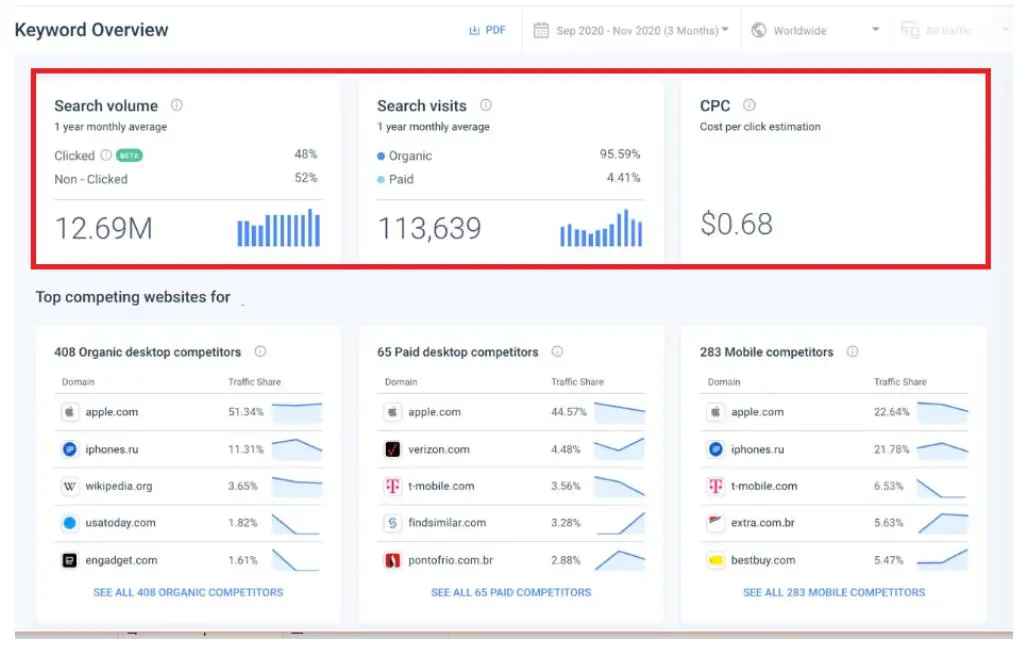
Competition
Competition tells you how difficult it may be to rank.
- Low = Good for beginners
- Medium = Moderate
- High = Competitive
Cost Per Click (CPC)
CPC shows how valuable a keyword is for advertisers.
Higher CPC usually indicates stronger business value.
Keyword Difficulty vs. Google Ads Competition
Google Ads competition and SEO keyword difficulty are not the same metric. Google Ads competition reflects competition among advertisers, while SEO difficulty refers to how challenging it may be to rank organically. Always consider organic competition when deciding which keywords to target for SEO.
Search Intent Explained
Google ranks pages based on search intent, not just keywords.
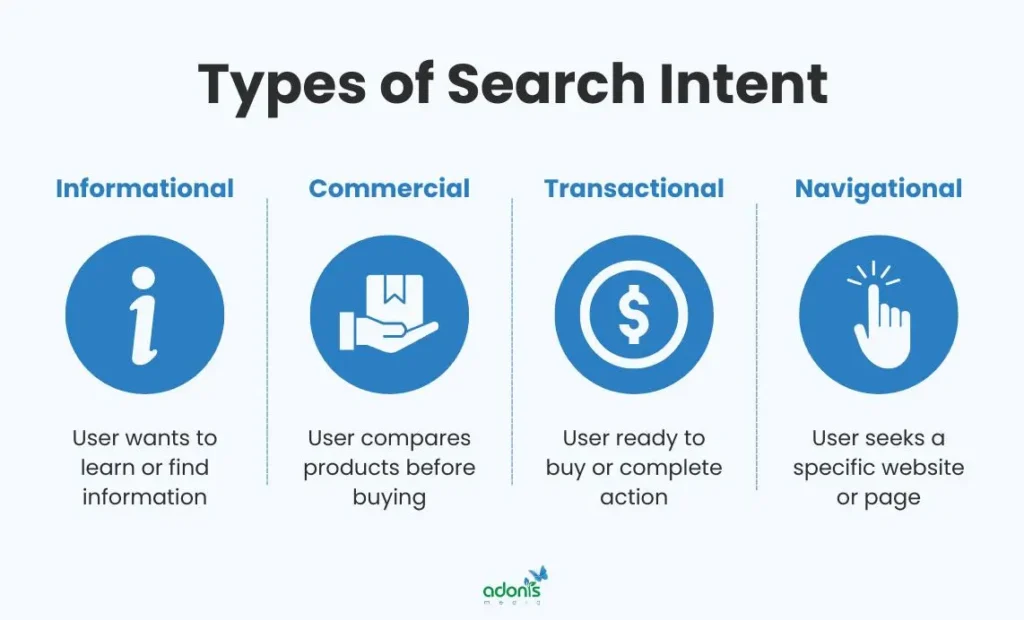
Informational Intent
Users want to learn.
Examples:
- What is keyword research?
- How to do keyword research
- SEO tutorial
Commercial Intent
Users compare products before buying.
Examples:
- Best keyword research tool
- Ahrefs vs Semrush
- Semrush pricing
Navigational Intent
Users want a specific website.
Examples:
- Ahrefs login
- Google Search Console
- Semrush
For this article, our intent is Informational.
Transactional Intent
Transactional intent occurs when a user is ready to take a specific action, such as purchasing a product, subscribing to a service, or hiring a provider. These searches often indicate a strong intention to convert rather than simply learn or compare options.
Examples:
- Buy a keyword research tool
- Purchase SEO software
- Hire an SEO consultant
- Subscribe to an SEO platform
For transactional searches, the most appropriate content usually includes product pages, service pages, pricing pages, and checkout or signup pages.
How to Analyze Competitor Keywords Using Google
Google’s first page is your best free SEO research tool.
Analyze These Elements
- Search intent
- Content type
- H2 headings
- FAQs
- Content gaps
How to Find Content Gaps
A content gap is a useful topic, question, or subtopic that competing pages do not fully address. Compare the top-ranking pages and look for important questions, examples, tools, or practical steps that are missing or only briefly covered.
- Questions competitors have not answered
- Topics they have covered only briefly
- Practical examples they do not provide
- Useful tools or resources they have not explained
Competitor Research Workflow
| Website | Purpose |
|---|---|
| Official information | |
| Ahrefs | Content structure |
| Semrush | SEO examples |
| User questions |
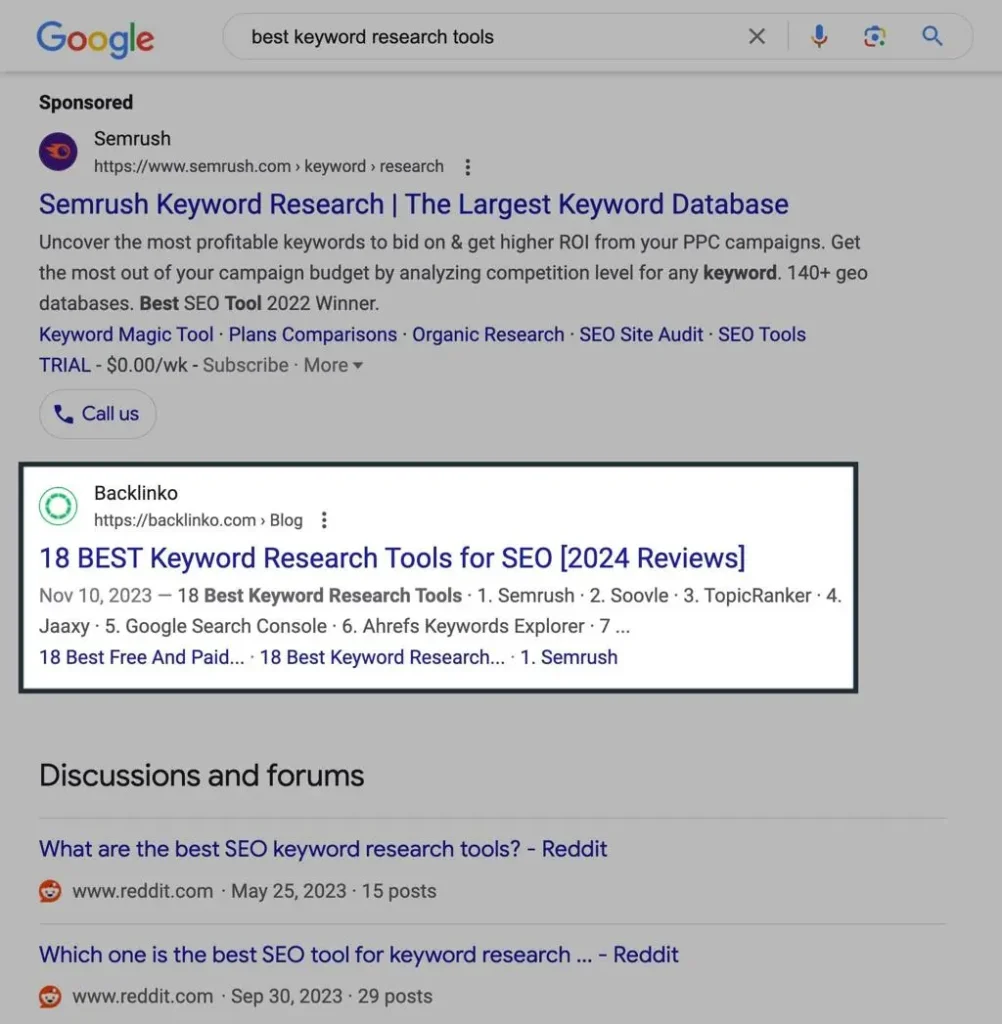
Don’t copy content. Study the structure.
Want to grow your traffic after finding the right keywords? Read our complete guide on How to Improve Website Traffic where we explain 15 proven SEO strategies that work together with keyword research.
Best Free Keyword Research Tools in 2026
1. Google Keyword Planner
Best for search volume and keyword ideas.
2. Google Trends
Best for trend analysis and seasonality.
3. Google Search Console
Best for discovering keywords your website already ranks for.
4. Ahrefs Free Keyword Generator
Best for additional keyword ideas.
| Tool | Best For | Free? |
|---|---|---|
| Google Keyword Planner | Keyword ideas and search data | Yes |
| Google Trends | Trends and seasonality | Yes |
| Google Search Console | Existing search queries and performance | Yes |
| Ahrefs Free Keyword Generator | Additional keyword ideas | Limited free features |
How to Prioritize Keywords
After collecting keyword ideas, you may have dozens or even hundreds of keywords to choose from. You don’t need to target every keyword. The goal is to identify the keywords that are most relevant to your website, realistic to rank for, and useful for your audience.
Use these factors to prioritize your keywords:
Search Volume
Search volume tells you how often people search for a keyword.
A keyword with higher search volume can potentially bring more traffic, but high-volume keywords are often more competitive. Don’t choose a keyword based on search volume alone.
Keyword Difficulty and Competition
Consider how difficult it may be to rank for a keyword organically.
Look at the websites currently ranking on the first page. If the results are dominated by highly authoritative websites, a newer website may have a harder time competing.
Look for keywords where you have a realistic opportunity to create a better and more useful result.
Search Intent
Make sure the keyword matches what the searcher actually wants.
- Informational:
how to do keyword research - Commercial:
best keyword research tools - Navigational:
Google Keyword Planner - Transactional:
buy SEO keyword research service
If your page doesn’t satisfy the search intent, ranking for the keyword may be difficult even if the keyword looks valuable.
Business Potential
A keyword should also make sense for your website and business.
- Is this keyword relevant to what we offer?
- Can this topic attract our target audience?
- Could someone who finds this page become a potential customer?
- Does the topic support one of our services or business goals?
A keyword with lower search volume can sometimes be more valuable than a high-volume keyword if it attracts the right audience.
Keyword Clusters
By now, you may have dozens or hundreds of keyword ideas. You don’t need to create a separate page for every keyword.
Instead, group closely related keywords that have the same or very similar search intent into keyword clusters.
For example:
| Keyword | Search Intent | Content Group |
|---|---|---|
| keyword research | Informational | Keyword Research Guide |
| keyword research for SEO | Informational | Keyword Research Guide |
| SEO keyword analysis | Informational | Keyword Research Guide |
| SEO and keyword research | Informational | Keyword Research Guide |
These keywords can potentially be covered naturally within one comprehensive page rather than creating four separate articles.
Keyword clustering helps you:
- Avoid creating unnecessary pages.
- Cover related topics more comprehensively.
- Organize your content structure.
- Reduce the risk of multiple pages competing for the same search intent.
- Build stronger topical coverage around an important subject.
Keyword Mapping: Which Keyword Goes on Which Page?
Once you have grouped your keywords into clusters, decide which page should target each cluster.
This process is called keyword mapping.
| Page | Primary Keyword | Supporting Keywords |
|---|---|---|
| Keyword Research Guide | keyword research for SEO | SEO keyword analysis, SEO and keyword research |
| Website Traffic Guide | how to improve website traffic | organic website traffic, increase website traffic |
Each important page should have a clear primary keyword and a group of closely related supporting keywords.
This helps keep your website organized and makes it easier to create content that matches the search intent behind each topic.
What Is Keyword Cannibalization?
Keyword cannibalization can happen when multiple pages on the same website target the same or very similar search intent.
For example, creating separate pages for:
- keyword research
- keyword research guide
- how to do keyword research
may create unnecessary overlap if all three pages are trying to satisfy essentially the same search intent.
Instead, consider covering closely related keywords within one comprehensive page when they serve the same purpose.
Create a separate page when the keyword represents a different topic or search intent.
Frequently Asked Questions
How do I choose the right SEO keyword?
Start with a seed keyword, analyze search volume, competition, and search intent before selecting a primary keyword.
Can I use Google Keyword Planner for SEO?
Yes. It’s one of the best free tools for discovering keyword ideas and monthly search demand.
How many keywords should one blog target?
Focus on one primary keyword and several closely related supporting keywords that naturally fit the same search intent. There is no fixed number of keywords you need to include. Prioritize helpful, comprehensive content instead of keyword frequency.
What is the difference between keyword research and SEO keyword analysis?
Keyword research finds ideas, while SEO keyword analysis evaluates those ideas using search volume, competition, CPC, and intent.
Should beginners target high-volume keywords?
Not always. Low-competition keywords often provide faster ranking opportunities for new websites.
What to Do After Keyword Research?
Keyword research is only the first step. Once you have selected your keywords, turn your research into a clear content plan.
- Choose one primary keyword for the page.
- Group closely related keywords by search intent.
- Map keywords to the appropriate pages.
- Create helpful content that satisfies the search intent.
- Optimize your title, headings, URL, and content naturally.
- Track impressions, clicks, and queries in Google Search Console.
- Update your content when new opportunities appear.
Final Thoughts
Keyword research is the foundation of successful SEO. Instead of chasing random topics, build your content around real search data, understand user intent, and create comprehensive articles that genuinely solve readers’ problems.
The better your keyword research, the stronger your long-term organic traffic will become.
Need Help Improving Your Website Traffic?
Want to audit your website or attract more organic traffic with a better keyword strategy? InkVertex can help you identify SEO opportunities, improve your website content, and build a strategy designed to reach the right audience.